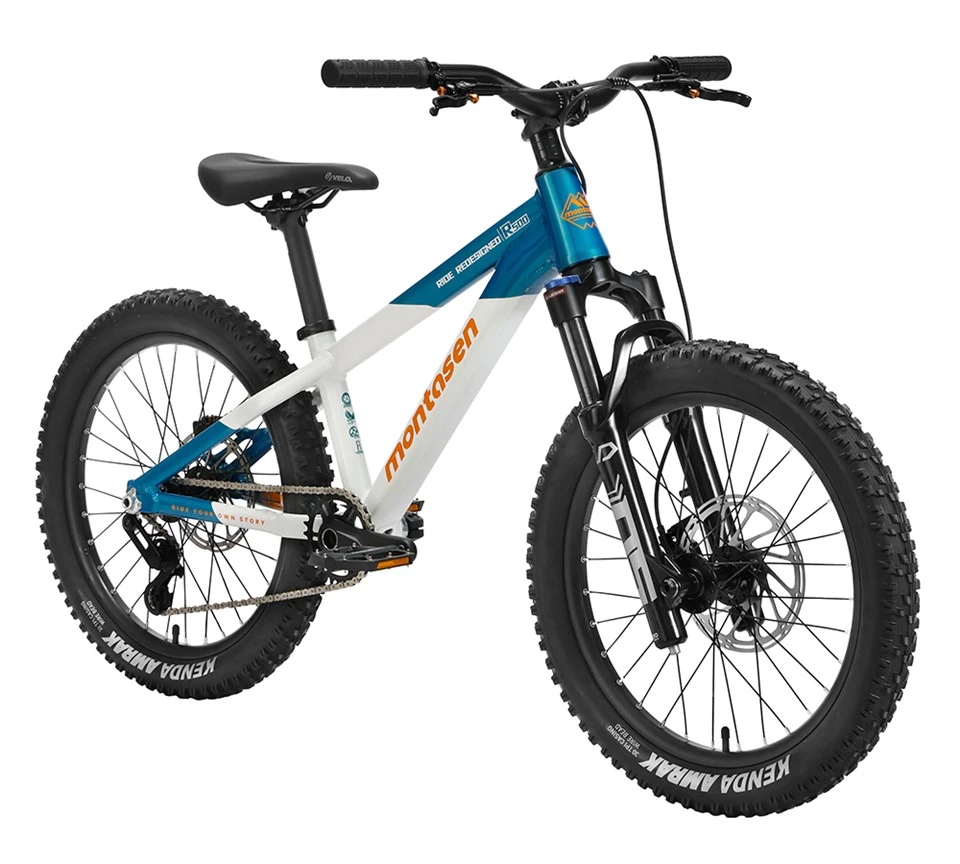
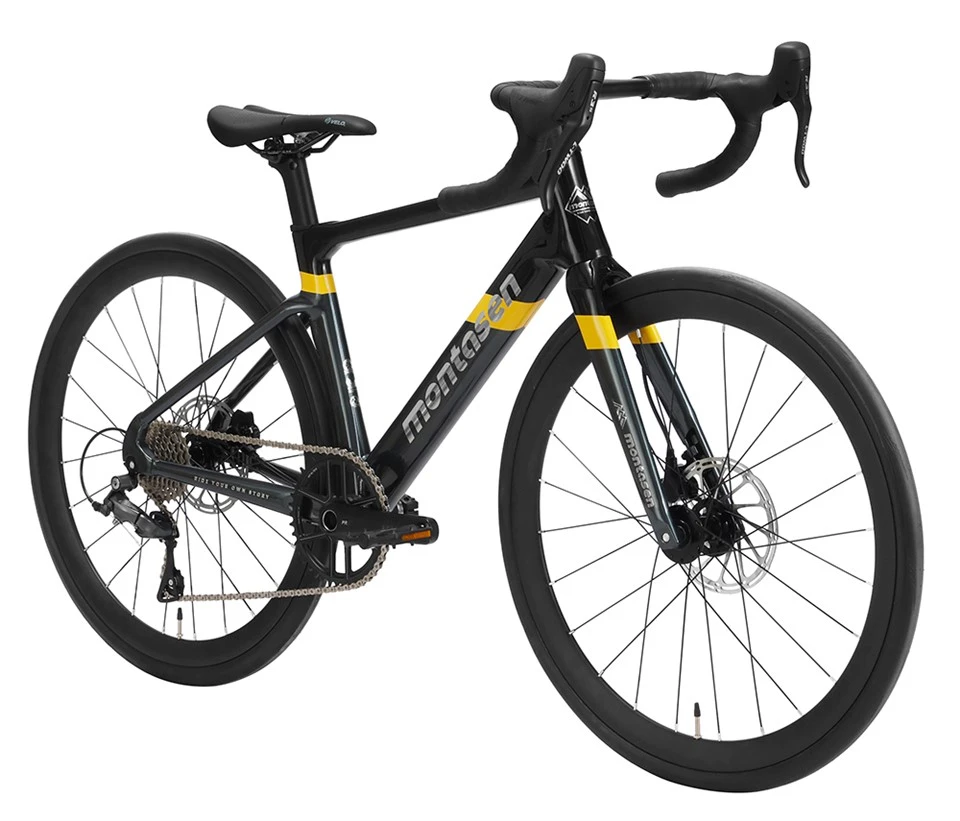
Parents look at the wheel diameter, the auxiliary wheels, and the color of the stroller when choosing one, but they overlook a crucial detail that directly determines whether the child dares to ride and can brake properly - the braking grip distance.
Children are not "afraid to press the brake because they are timid", but the brake lever on the stroller is designed based on the size of an adult's palm: an adult's palm is 75mm wide, while a 3-5-year-old child's palm is only 55-65mm wide. They have to hold the brake lever with their entire hand and press it all the way down to barely slow down. The more panicked they are, the more they can't hold it, and eventually they end up crashing into it.

What is grip width? It's not about "how long the brake lever is", but rather "how far can your fingers reach"?
According to GB 14746-2006 "Safety Requirements for Children's Bicycles":
The maximum grip size from the outer surface of the brake lever to the outer surface of the handlebar sleeve
Distance between point A and point B ≤ 60mm
Distance between point B and point C ≤ 75mm
In simple terms: When a child naturally places their fingers on the handlebar sleeve and bends their fingers, the position where the tips of their fingers can touch the brake lever must fall within these two distances. If it exceeds these limits, it means "the brake lever is out of reach for the hand".
The grip size for adult bicycle brakes is usually 75-80mm. It is legal but ineffective for children - the upper limit of 75mm in the national standard is the maximum value, not the recommended value.
II. Why is approximately 58mm the "sweet spot" for low-riding children's bikes?
The hand measurements for children aged 3 to 6 are approximately as follows:
The width of the palm when fully spread: 55-65mm
The distance from the second knuckle to the palm: approximately 28-32mm
The natural bending and closing stroke of a single finger (index finger): approximately 25-30mm
When adjusting the brake lever to the 58mm level (within segment A-B), the effect is:
With the natural bending of both fingers (index finger + middle finger), the brake lever can be comfortably wrapped around, without having to spread your hands wide.
The act of squeezing is short, and the braking force is produced within 1/3 of the travel of the V-brake pad.
During tension, the "clenching fist" action directly converts into braking force, without slipping or deviation.
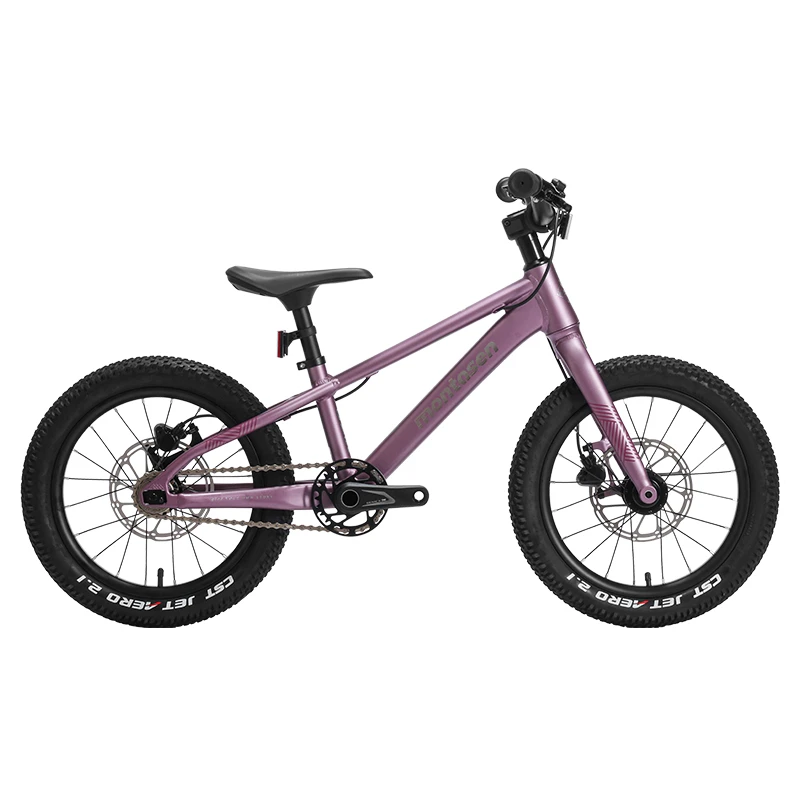
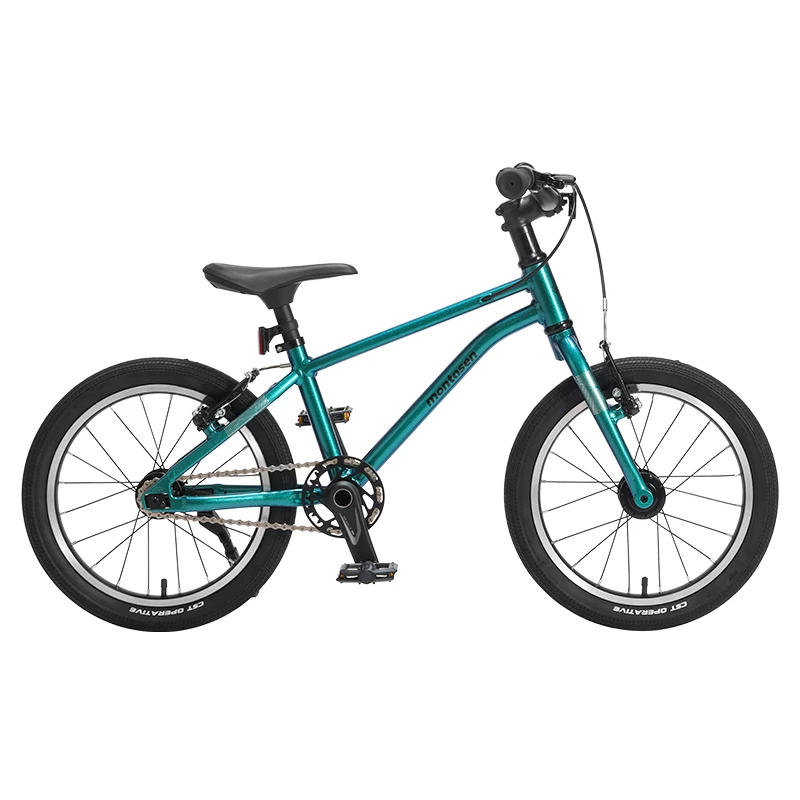
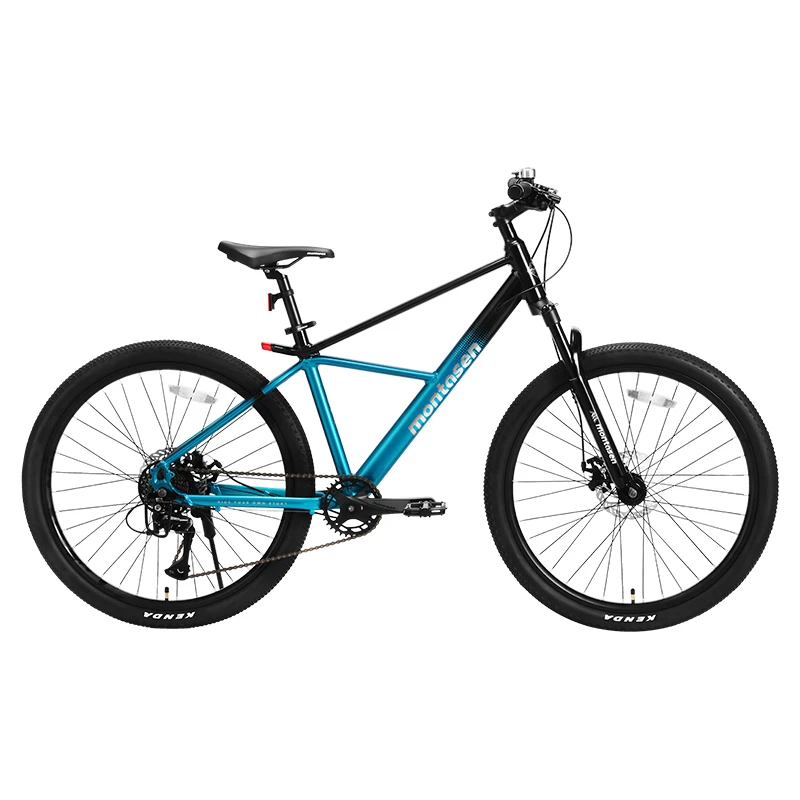
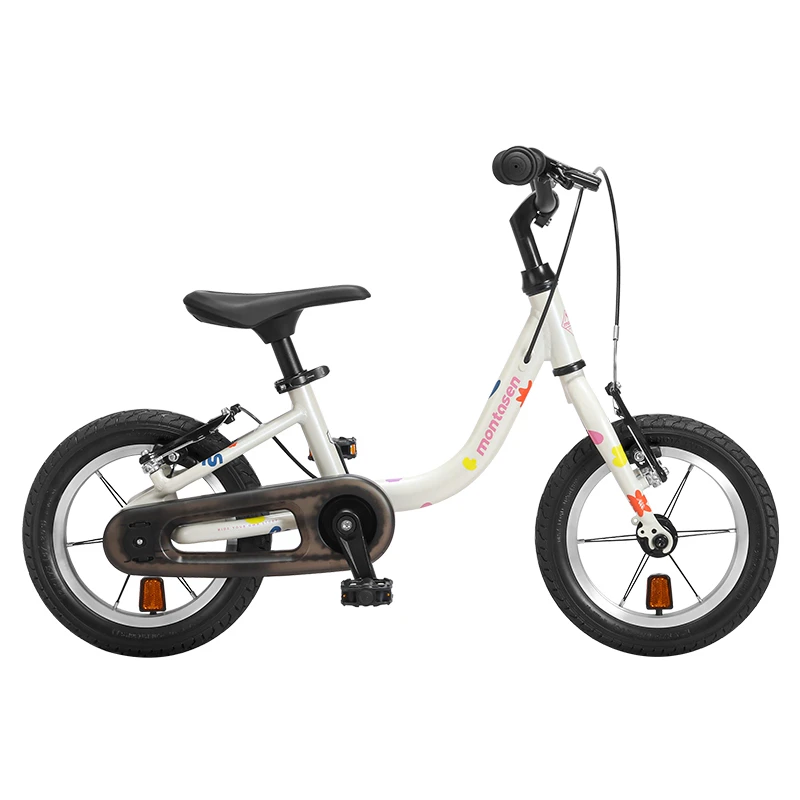
In the industry, 58mm is referred to as the "third knuckle joint standard grip distance" for children. Brands specializing in children's cycling research mostly adopt this standard for low-age models ranging from 12 to 16 inches; models such as Montasen F08 / EB01 / D07 are equipped with Tektro's equivalent full-aluminum short grip-distance brake levers, with a measured length of approximately 55-58mm. A light pinch with both fingers already gives a sense of deceleration.
⚠️ Note: The grip distance is not necessarily shorter is better. Below 50mm will cause the brake lever to stick to the handlebar, leaving no space for the fingers to exert force; around 58mm is the balance point between being "reachable" and "squeezable".

III. Incorrect grip position can lead to 3 hidden pitfalls
1. Unable to grip → Stop by dragging feet
The child's small hands couldn't reach the braking point. When encountering an emergency, the first reaction was to stretch out the feet to drag the ground, turn towards the grass, or bump into the parent's legs. When the speed was too fast, the foot brakes couldn't withstand the inertia.
2. Slamming on the front brake → Front flip
Since the grip distance of the rear brake was also insufficient, in panic, the child desperately squeezed the nearest front brake. The braking force was concentrated on the front wheel, causing the low-center-of-gravity bike to nod and flip forward.
3. Keeping hands stretched and gripping the handlebars for a long time → Wrist extension
To reach the brake lever, the child would unconsciously turn the wrist outward and raise the shoulders. After riding for 20 minutes, they would complain of hand pain and the pedaling posture would also become distorted.
IV. On-site Self-Check: Judge in 3 seconds if the brake lever is properly positioned
When taking your child to the store or having it delivered to your location for testing, follow these 3 steps:
1. Have your child sit on the seat cushion (adjust it to a height where the toes touch the ground), and place both hands naturally on the handlebar grip.
2. Without following the instructions, ask your child to "pretend there is a car in front and stop" - observe how many fingers are used to press, and to what extent the speed is reduced.
3. Qualified performance: Use two fingers (or three fingers) to naturally bend and grip the brake lever. There is no need to spread your hands or turn your arms outward. Press 1/3 to 1/2 of the travel distance, and the wheel will noticeably slow down.
If the child has to "hold the brake lever with the entire hand" or "press until it stops", the grip distance of the bike is not compatible. Don't believe that "it will get easier with practice".
V. Besides the grip distance, there are 2 other points to consider for low-age brakes
Brake lever material vs. lever ratio: A full-aluminum short-grip brake lever has better rebound stability compared to a plastic one. The lever ratio is adjusted according to the strength of a child's hand (the Montasen low-age model series all follow this approach). It's not just about simply shortening the grip distance.
V-brake pad travel: Use a short-travel brake pad for children, with a 5mm force when squeezing. This is not the case for adult long-travel pads (the new national standard GB 46517-2025 also emphasizes this point).
Disc brakes are not a must for low-age models: Hydraulic disc brakes are too forceful, and young children cannot control them, making them prone to sudden stops and side flips. Mechanical disc brakes, if the grip distance is not adjusted according to the weight of children, will also be difficult to squeeze. For 3-6-year-old children learning on flat ground, the short-grip V-brake is the most stable solution.

VI. FAQ
Q: What age group is the 58mm grip size suitable for?
A: It is most suitable for children aged 3-6 (with a palm width of 55-65mm); for those aged 7 and above, with a palm width approaching 70mm, it can be transitioned to a 60-65mm teenage grip size.
Q: The grip size is appropriate but the child still can't squeeze. Why?
A: Check three aspects: whether the brake line is rusty and stuck, whether the V brake pad is of an adult long stroke, and whether the wheel is too heavy (heavy wheels have greater kinetic energy, and the braking sensation is weaker with the same braking force). The grip size is only a prerequisite, not the entire solution.
Q: How to handle the grip size for professional children's bikes like MONTASEN?
A: For low-age lines (such as F08/EB01/D07), use a 58mm full-aluminum short grip brake with the brake lever calibrated according to the third finger joint of the child, and gently pinch with both fingers to activate the braking; at the same time, equip with a short-stroke brake pad and a low-cross frame, and all three will work together.